Exhaust Composition Transient Operation Laboratory (ECTO-Lab™)
Advanced science. Applied technology.

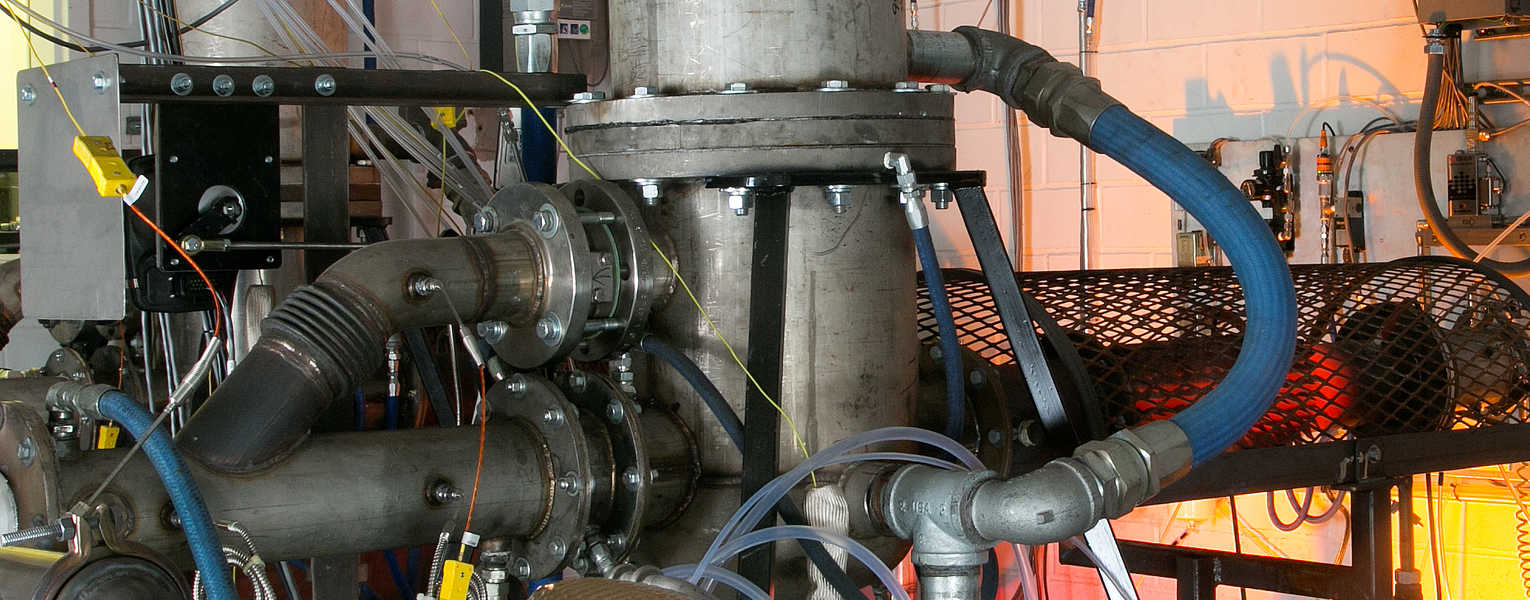
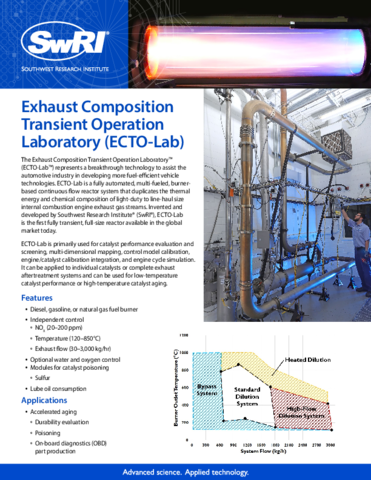
The ECTO-Lab™ technology is a multi-fueled, burner-based reactor system designed to replicate exhaust conditions generated by internal combustion engines. The ECTO-Lab system can simulate lean and stoichiometric exhaust gas conditions utilizing gasoline, diesel, natural gas, or propane fuels. It employs several modular features to meet the testing requirements for a wide range of full-size aftertreatment catalysts and devices.
The exhaust gas conditions are generated through independent, model based control and allow any combination of flow, temperature, NOX, THC, H2O, and O2 concentration within its window of operation. The ECTO-Lab technology can accommodate systems for engine applications between 1.5 L and 30 L. As such, the system can be tailored to meet the needs of commercially available components, as well as, advanced technologies that require specialized testing capabilities. Overall capabilities are further enhanced with the ability to execute transient cycles, which enables regulatory cycle testing and aftertreatment screening for multiple engine applications.
As a flexible research tool, the ECTO-Lab system provides additional features to replicate field aged components. To do so, an oil and sulfur dosing system is utilized to promote chemical poisoning exposure to aftertreament components. This provides the end user with valuable information to understand field component aging under specialized cycle operation. For light duty applications, the sulfur dosing system can also be used to evaluate Lean NOX Trap (LNT) performance for engine De-SOX strategies. Coupled with the NOX control system, complete LNT testing can be executed, which also includes the De-NOX stage.
ECTO-Lab system offers several advantages over conventional engine testing, which includes wider operating ranges and independent control over exhaust constituents. The burner system is more cost effective since it relies on a simple design and requires little maintenance. Additional safety features also make the ECTO-Lab technology a great option to protect parts from unintended exotherms or other potentially damaging issues.
Aftertreatment Technologies
Catalyst Aging Services
Catalyst Characterization
Catalyst Formulation
Emissions